
Built to Adapt Pt 6
Apr 28, 2026Your Gut Is Always Rebuilding
Last week, we talked about hormones and how they are not the problem, but rather signals that reflect what is happening inside your body. That idea begins to shift the way you interpret symptoms. Instead of immediately trying to suppress or correct them, you start to ask what your body is responding to. This week, we are going to take that same perspective and apply it to one of the most influential and often misunderstood systems in the body. It is a system that plays a role in digestion, immunity, energy, mood, and even how you think and feel on a daily basis. We are talking about the gut.
This topic is particularly meaningful to me because I have experienced what it feels like to have poor gut health. There was a period of my life where I dealt with constant discomfort, low energy, bloating, and a general sense that something in my body was not functioning the way it should. At the time, it was frustrating and confusing. It felt like something deeper was wrong, something I could not fully understand or control. Like many people, I started to look for specific foods to blame or quick fixes that might solve the problem. But the more I have reflected on that time, the more I have realized that my gut was not randomly failing. It was responding to the environment I had created.
During that phase of my life, stress was consistently high, sleep was inconsistent, and alcohol was a regular part of my routine. None of those factors felt extreme on their own, but when layered together day after day, they created a set of conditions that my body had to adapt to. The gut, being one of the most sensitive and responsive systems in the body, reflected those conditions quickly and clearly. What I interpreted at the time as dysfunction was, in many ways, an appropriate response to chronic inputs that were not supportive of long-term health.
One of the most fascinating and empowering aspects of gut health is how resilient and dynamic this system actually is. The lining of your gut is constantly regenerating, and the community of bacteria that lives within it, often referred to as the microbiome, is continuously shifting based on your diet, lifestyle, and environment. This is not a fixed system. It is in a constant state of renewal. That means your gut is not defined by a single meal, a single weekend, or even a short period of unhealthy habits. It is shaped by patterns, by the repeated inputs you provide over time.
This is where a lot of confusion arises. People will often clean up their diet for a few days or make a short-term effort to improve their habits and expect immediate, lasting change. When that does not happen, they assume something is wrong or that their body is not capable of improving. But the gut does not respond to short bursts of effort. It responds to consistency. Just as it can adapt in a negative direction when exposed to chronic stress, poor nutrition, and environmental strain, it can also adapt in a positive direction when those inputs begin to improve.
This idea became very real for me as I started to make gradual changes to my lifestyle. I improved my sleep, reduced my alcohol intake, managed stress more intentionally, and became more consistent with how I fueled my body. Over time, my digestion began to improve. The discomfort I once felt regularly started to fade. My energy stabilized, and perhaps most interestingly, my relationship with certain foods began to change.
For years, I believed that I had an intolerance to foods like dairy and gluten. Every time I consumed them, I experienced negative symptoms, which made it easy to label those foods as the problem and avoid them altogether. However, as my overall gut health improved, my tolerance to those foods improved as well. Foods that once caused discomfort were no longer an issue in the same way. This was not because those foods had changed, but because my body had changed in its ability to process and respond to them.
That does not mean I now approach my diet without intention. I still make choices that support my digestion and overall health. For example, I tend to favor sourdough over more conventional forms of bread, both because of how it is prepared and because of the way much of our modern wheat is grown and processed. But the bigger realization was that my gut was not inherently fragile or permanently damaged. It was adaptive. It responded to the conditions I created, and when those conditions improved, so did its function.
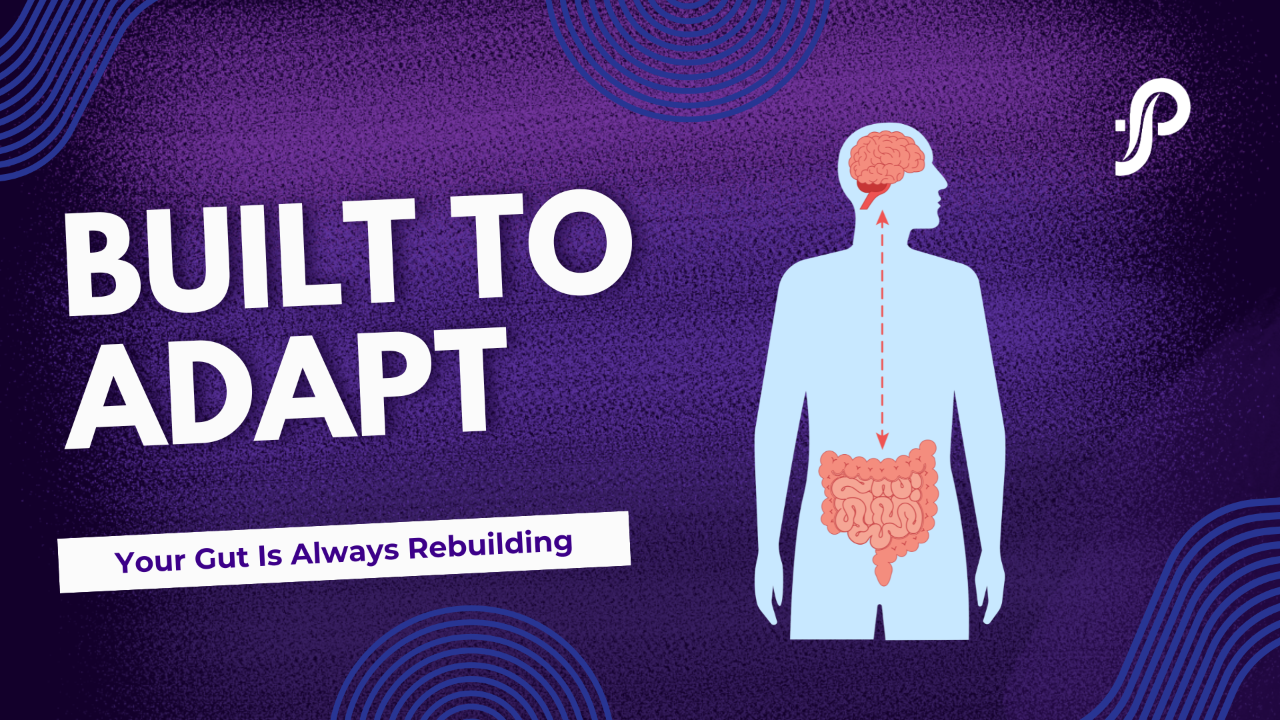
This is also where the idea of the gut as the “second brain” becomes more than just a phrase. The gut is deeply connected to the nervous system and communicates directly with the brain through the gut-brain axis. It plays a significant role in regulating mood, stress responses, and overall well-being. When your gut is under strain, that strain does not stay isolated to digestion. It can influence how you feel mentally and emotionally as well. This is why gut health is not just about what you can or cannot eat. It is about how your entire system is functioning and communicating.
At the same time, it is important to consider the broader environment that your gut exists within. The rise in highly processed foods, the widespread use of pesticides, and the increased exposure to environmental toxins all contribute to the conditions your body has to navigate. While it is not necessary or realistic to eliminate every potential stressor, it is important to be aware of how these factors can accumulate over time. The gut, like every other system we have discussed, adapts to its environment. When that environment is consistently challenging, the system reflects that.
Despite all of this, the most important takeaway is not that the gut is fragile, but that it is resilient. It is constantly rebuilding, constantly adapting, and constantly working to find balance based on what it is given. That resilience is what makes change possible, but it also requires patience. There is rarely a single intervention that transforms gut health overnight. Instead, it is the result of repeated, consistent inputs that allow the system to gradually move in a healthier direction.
Looking back, there was no moment where my gut suddenly healed. There was no single breakthrough or quick fix. It was a process- a series of small decisions made consistently over time that allowed my body to respond and adapt in a different way. That process is not always easy, and it does not happen instantly, but it is reliable.
Your gut is not working against you. It is not randomly failing. It is responding to the life you are living and the environment you are creating. When you begin to understand that, the question shifts. Instead of asking what you need to eliminate or fix immediately, you start asking what kind of environment you are creating for this system to operate in, and whether that environment is supporting the kind of health you are trying to build.
That idea becomes even more important when you zoom out and look beyond digestion. Because everything we have talked about in this series so far, your brain, your nervous system, your immune system, your metabolism, your hormones, and now your gut, is constantly responding to how you live.
And there is one system that ties all of this together in a very real, physical way.
How you move.
In next week’s Built to Adapt blog post, we will shift our focus to the musculoskeletal system and explore how your body adapts to the way you use it, why movement is one of the most powerful signals you can give your body, and how strength and mobility play a direct role in long-term health and resilience.
Don't miss a beat!
New moves, motivation, and classes delivered to your inbox.
We hate SPAM. We will never sell your information, for any reason.