
Estimated Read Time: 10–12 Minutes
Last week, I wrote that maybe you're not broken. Maybe you're living in a weird time.
A time where obesity, chronic disease, anxiety, distraction, exhaustion, and confusion around food have somehow become normal. A time where most people feel like they're constantly trying to get healthy while simultaneously being surrounded by things that make that increasingly difficult. The point of that article wasn't to provide answers. It was to start asking questions. If something changed, what changed? If so many people are struggling, why? And if our grandparents and great-grandparents seemed to have a different relationship with food, movement, and health than we do, what happened between then and now?
This week, I want to show you one of the first things that made me stop and say:
"Wait... what?"
Oddly enough, it starts with school lunch.
If you grew up in the 80s, 90s, or early 2000s, you probably re...
A few weeks ago I caught myself standing in my kitchen eating dinner while simultaneously scrolling Instagram, half-listening to a podcast, and replying to a text message that absolutely could’ve waited until tomorrow. I had one of those moments where you suddenly become fully aware of what you’re doing in real time, almost like your brain briefly zooms out and goes:
“Dude… what am I doing?”
This kind of behavior has become so common now that most people barely notice it anymore. People wake up exhausted, drink caffeine just to feel functional, stare at screens all day, eat lunch while answering emails, listen to podcasts about reducing stress while multitasking six other things at the same time, scroll social media while watching Netflix, then finally climb into bed exhausted only to realize their brain suddenly refuses to shut off the second the stimulation stops.
I’m not saying any of this like I’ve escaped it eit...
Over the past seven weeks, we’ve talked about the brain, the nervous system, the immune system, metabolism, hormones, gut health, and movement. On the surface, those topics can seem separate. Most people think about them individually. If they are tired, they think they have an energy problem. If they gain weight, they think they have a metabolism problem. If they feel anxious or depressed, they think they have a brain problem. If digestion is off, they think they suddenly developed a food intolerance. Modern health conversations tend to separate the body into isolated systems and then look for isolated solutions to match.
But the body does not work that way.
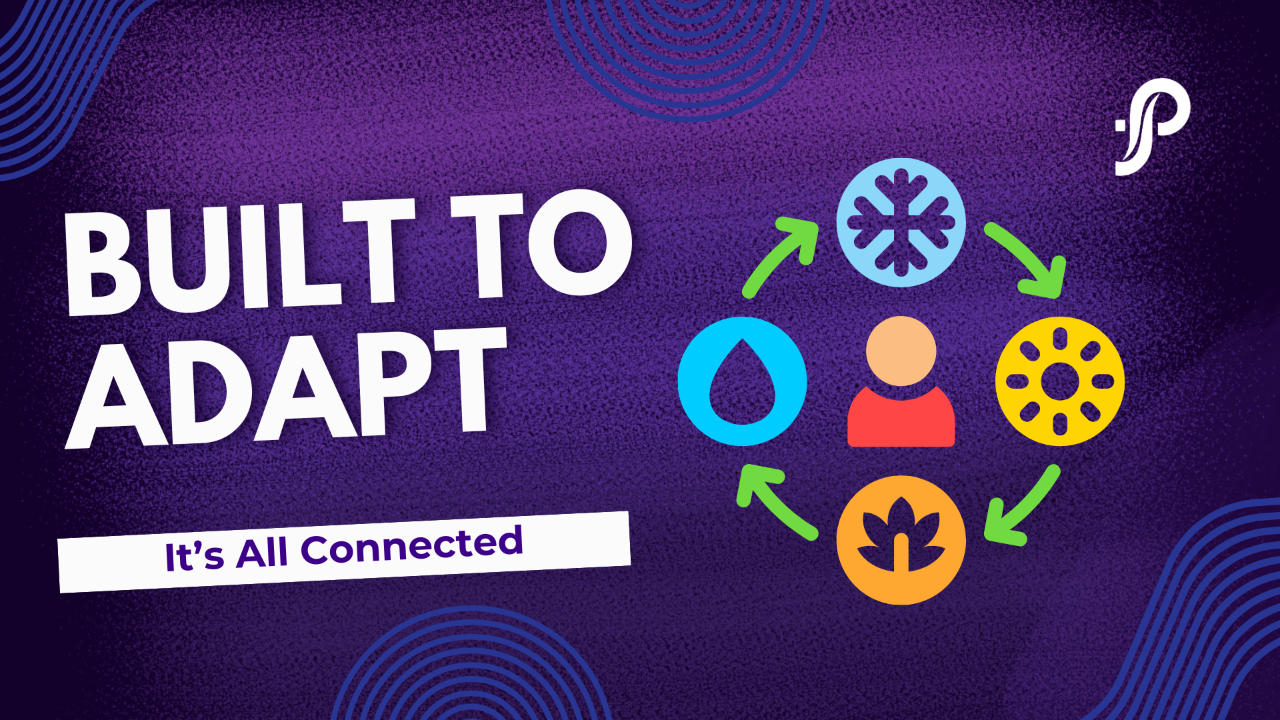
Everything is connected. Your sleep affects your hormones. Your stress affects your digestion. Your movement affects your metabolism, your brain, and your immune system. Your nutrition influences all of it. The body is constantly communicating internally and responding to the environment you create for it.
Th...
Last week, we talked about gut health and how your body is constantly rebuilding itself based on the inputs you give it. That same idea applies across every system in your body. This week, we’re bringing it into something you can see and feel more directly- your movement, your strength, and how you use your body on a daily basis.
Most people think about exercise in terms of how it changes the way they look. It is often framed as a tool for fat loss or muscle definition. And while those outcomes can absolutely happen, they are not the primary purpose of training. They are a byproduct. In many ways, looking better is simply the most visible side effect of a much deeper process happening inside the body.
When you train, you are not just changing your physique. You are sending a signal that influences nearly every system we have talked about in this series. Muscle is not just for movement or aesthetics. It is one of the most metabolically ...
Last week, we talked about hormones and how they are not the problem, but rather signals that reflect what is happening inside your body. That idea begins to shift the way you interpret symptoms. Instead of immediately trying to suppress or correct them, you start to ask what your body is responding to. This week, we are going to take that same perspective and apply it to one of the most influential and often misunderstood systems in the body. It is a system that plays a role in digestion, immunity, energy, mood, and even how you think and feel on a daily basis. We are talking about the gut.
This topic is particularly meaningful to me because I have experienced what it feels like to have poor gut health. There was a period of my life where I dealt with constant discomfort, low energy, bloating, and a general sense that something in my body was not functioning the way it should. At the time, it was frustrating and confusing. It felt like something deeper ...
Last week, we talked about metabolism and how your body is constantly adjusting its energy output based on how you live. That conversation starts to challenge a common belief, the idea that your body is fixed and working against you. When you begin to see metabolism as something adaptive, something that responds to your environment, it opens the door to a much bigger realization. The same is true for nearly every system in your body. This week, we’re going to apply that same lens to something that people often feel even more confused and frustrated by.
Hormones have become one of the most common explanations for why people feel “off.” Low energy, poor sleep, weight gain, low libido, and mood swings are often quickly attributed to something being wrong internally. It does not take long before the conclusion becomes that your hormones are out of balance, out of sync, or somehow working against you. But that assumption misses something important.
Your ...
Last week, we talked about the immune system and how your body is constantly protecting you, even when it doesn’t feel like it. That idea starts to shift the way you look at symptoms. Instead of assuming something is wrong, you begin to ask what your body is responding to. This week, we’re going to take that same lens and apply it to something that almost everyone has an opinion about, and very few people actually understand.
Metabolism is one of the most talked about and misunderstood aspects of health and fitness. People throw the word around constantly, usually as an explanation for why something isn’t working. “I just have a slow metabolism” has become one of the most common conclusions people arrive at, almost like it’s a fixed trait they were born with and have no control over.
But your metabolism isn’t a fixed trait. It is a response.
It does not exist in isolation or operate on its own. It is constantly adjusting based on how you live. Your met...
Last week, we talked about the nervous system and how your body can get stuck in a constant state of “on,” always alert, always ready, even when there is no real threat in front of you. That alone starts to shift how you see your body. It’s not random, and it’s not failing. It’s responding. It’s adapting to the environment you give it. This week, we’re going to take that idea one step further and look at another system that is constantly working behind the scenes, protecting you in ways most people never stop to consider.
Your immune system is always working. Every second of every day, it is scanning, identifying, responding, and protecting you from potential threats. It is managing bacteria, viruses, damaged cells, and internal changes without you ever having to think about it. It is one of the most complex and intelligent systems in the human body, and yet most people only think about it when something feels wrong. When they get sick, when they fe...
Last week, we started this series by talking about neuroplasticity and how your brain is constantly adapting to the way you live. Whether you realize it or not, it is always changing, always rewiring, always responding to the inputs you give it. That idea alone is powerful, because it means you are not stuck. You are always capable of change. This week, I want to zoom out a bit and look at another system that is just as incredible, and maybe even more overlooked.
There is something happening inside your body every second of every day that most people never think about. Your nervous system is constantly monitoring your environment and deciding how your body should respond. It is adjusting your heart rate, your breathing, your muscle tension, your focus, your energy, all in real time. It is taking in information from the world around you and making thousands of decisions to keep you alive, functioning, and prepared for whatever comes next. And the most ...
There’s something incredible happening inside your body right now, whether you’re aware of it or not. Not just when you decide to work on yourself, not just when you’re training or trying to improve, but constantly, in the background of your everyday life. Your brain is adapting. Every thought you have, every movement you make, every environment you spend time in is shaping it in real time. Quietly, consistently, and without asking for your permission. This process is known as neuroplasticity, and it represents one of the most powerful and underappreciated systems in the human body. It is the reason you can learn, grow, recover, and evolve at any stage of life.
What makes neuroplasticity so fascinating is that your brain is always trying to make your life more efficient. Each time you repeat a behavior, your brain strengthens the neural pathways associated with it, making that behavior easier, faster, and more automatic over time. Movements that once fel...
50% Complete
Lorem ipsum dolor sit amet, consectetur adipiscing elit, sed do eiusmod tempor incididunt ut labore et dolore magna aliqua.