
Majoring in the Minors- Week 1
Dec 02, 2025Heat, Cold & The Power of Controlled Discomfort
When we wrapped up the Fitness Can Save the World series, I said something that still rings true here: fitness is bigger than workouts, reps, or aesthetics. It’s the full ecosystem of habits that support a strong, resilient, healthy body. Strength training, good nutrition, quality sleep, and real recovery will always be the foundation: the majors. But once those pillars are in place, there’s a whole world of supportive tools that can elevate your health even further. These tools aren’t replacements. They’re amplifiers. And that’s what this new 8-week series, Majoring in the Minors, is all about.
I'm starting with heat and cold therapy because they’ve made a bigger impact on me than I ever expected. Not because they’re trendy, not because of biohacking culture, and not because they look cool on Instagram, but because they’ve genuinely improved how my body feels, how I recover, and how I handle stress. What surprised me most is that the mental benefits have been just as powerful as the physical ones.
I started cold exposure a little over two and a half years ago. At the time, my only goal was to manage inflammation. Training hard and moving my body regularly takes a toll, and my joints were feeling it. I wanted a tool that would reduce soreness, improve recovery, and help me feel less beat up. And cold absolutely did that, but it also did a lot more.
We talk a lot about dopamine these days- it’s the internet’s favorite buzzword, right up there with “toxins” and “nervous system regulation.” But cold exposure genuinely creates a massive dopamine rise- the good kind. The kind that improves mood, fight-or-flight control, motivation, and mental clarity for hours afterward. That’s why my mind feels so dialed-in on the days I plunge.
Cold also activates brown adipose tissue, increasing metabolic activity, and it triggers vasoconstriction followed by vasodilation, pumping fresh blood and nutrients through the muscles and helping flush out metabolic waste. It’s one of the simplest recovery tools most people have never tried.
And before you think cold therapy means “sit in an ice bath and suffer,” here’s the part people need to know: You get the cold-response benefits at anything below 60°F. You don’t need 32°F. You don’t need pain. You just need cold enough to challenge you.
Personally, I prefer my plunge between 45–50°F, and I aim to accumulate about 11–12 minutes per week. I break that into 3–4 sessions, depending on how I’m feeling. That’s the sweet spot where research shows the greatest benefits- mood, inflammation control, stress resilience, and metabolic activation.
The biggest lesson cold taught me wasn’t scientific at all- it was psychological. Cold forces you into stress… and then teaches you how to calm your own body down inside that stress. You learn how to breathe your way from panic to control. That skill carries over into all kinds of situations: hard workouts, frustrating days, uncomfortable conversations, and those moments where life puts pressure on you and you have to regulate yourself instead of reacting.
Heat has been a newer part of my routine. I’ve used saunas in the past, but it wasn’t until this year that I committed to regular heat exposure. My main goal was longevity. Heat therapy increases heat shock proteins- little cellular “bodyguards” that repair damage, protect your DNA, and support long-term resilience. Heat also strengthens your cardiovascular system by increasing heart rate and improving circulation, similar to a light cardio session.
And again, the practical side matters here too.
Most people benefit from sauna temperatures of 150–160°F, aiming for around 120 minutes per week. That might sound like a lot, but it doesn’t have to be. I break it into smaller sessions depending on my schedule- 20–30 minutes a few times a week will easily add up.
What matters isn’t perfection- it’s consistency.
Heat relaxes your muscles, reduces tension, and helps your nervous system unwind. For me personally, it improved my sleep almost instantly and when sleep improves, everything improves: recovery, energy, patience, mood, training performance. I originally added heat for long-term health benefits, but I stayed for the short-term ones.
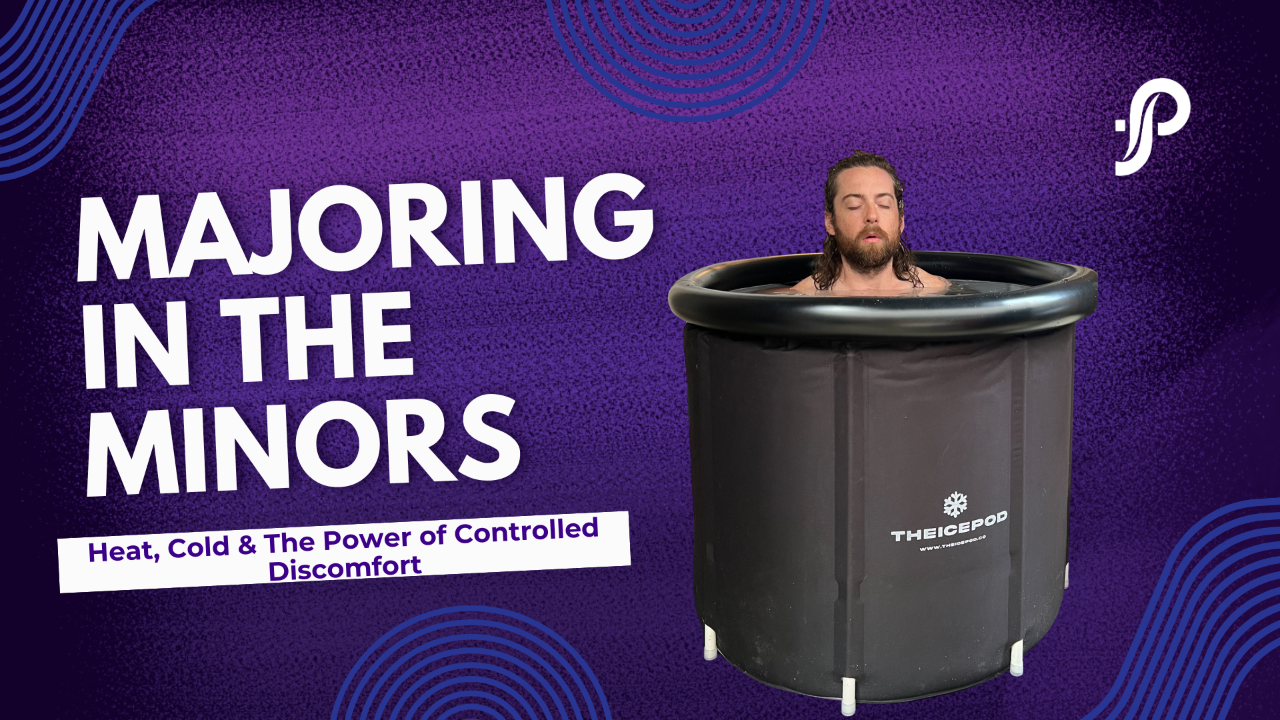
And despite what social media makes it look like, you don’t need a luxury spa or a $10K cold plunge to get these benefits. These tools are more accessible than ever. I bought a sauna tent and a plunge bath from The Pod Company- nothing fancy, not a sponsorship, just something that fit my life. They made it possible for me to build these habits right at home without draining my bank account.
Both heat and cold are forms of controlled adversity. They’re small, intentional stressors that teach your body and mind how to adapt. And that’s something our modern environment doesn’t give us much anymore. We live in comfort 24/7- climate control, soft surfaces, temperature-stable rooms, endless convenience. We’ve removed so many natural stressors that our tolerance for discomfort has atrophied. Heat and cold bring that challenge back in a simple, healthy way.
Heat and cold won’t replace strength training, nutrition, or sleep, but they absolutely can amplify every one of those pillars when used well. They help your body recover faster. They help your brain regulate stress better. They help you sleep more deeply, think more clearly, and feel more balanced throughout the day. For a lot of people, these small practices are the difference between surviving and actually feeling good in their bodies again.
This is what “Majoring in the Minors” is all about- shining a light on the smaller habits that quietly upgrade your life in surprisingly powerful ways. Over the next eight weeks, we’re going to explore tools that support your physiology, sharpen your mind, and improve your quality of life in ways most people overlook. Things like light hygiene, environment quality, nervous system regulation, supplements that actually matter, and the “movement snacks” that can fix more pain than stretching ever will.
Little things, big impact. That’s the theme.
Next week, we’re diving into light exposure and circadian biology- how the simple act of getting morning sunlight and reducing nighttime brightness can dramatically improve sleep, energy, hormonal regulation, and long-term health. It’s one of the easiest habits to add, and one of the most powerful.
Don't miss a beat!
New moves, motivation, and classes delivered to your inbox.
We hate SPAM. We will never sell your information, for any reason.