At this point in the Majoring in the Minors series, we’ve talked about heat and cold exposure, light, air and water quality, household products, and supplementation. On the surface, these topics can seem unrelated. But in reality, they all feed into the same system. And that system is the nervous system.
The nervous system sets the tone for how your body experiences the world. It determines whether you feel calm or on edge, focused or scattered, energized or exhausted. It influences how well you sleep, how well you digest food, how you recover from workouts, and even how effectively nutrition and supplements work. If the nervous system is dysregulated, everything else feels harder than it should.
Most people think of stress as something external. Deadlines, traffic, work, family responsibilities, finances. But stress isn’t just a circumstance. It’s a physiological state. And many people are living in a constant low-grade fight-or-fligh...
Supplements are one of the most confusing and overcomplicated areas of health. Walk into any supplement store or scroll health content online and you’ll be told that you’re missing something, that there’s a pill for every problem, and that the next product might finally be the thing that fixes your energy, your hormones, or your body composition. It’s no surprise people feel overwhelmed or skeptical.
The truth is, supplements are neither useless nor magical. They sit somewhere in the middle. They don’t replace the foundations of health, but when used intentionally, they can support them.
That distinction matters.
In this Majoring in the Minors series, I’ve been very clear that supplements are not the majors. Strength training, nutrition, sleep, stress management, and movement still do the heavy lifting. If those things are missing or inconsistent, no supplement will make up for it. Pills don’t fix broken systems.
Where supplements do have valu...
Up to this point in the Majoring in the Minors series, we’ve talked about heat and cold exposure, light, air, water, and the environments we spend our time in. This week builds on all of that, because now we’re zooming in on something even more personal. The products you put on your body. The products you clean your home with. The things you touch, smell, and absorb every single day without thinking much about them.
Most people assume that if something is sold in a store, it must be safe. That assumption makes sense. We’re busy. We have enough decisions to make already. Very few people want to stand in an aisle reading ingredient lists on laundry detergent or deodorant. But the reality is that many common household and personal care products contain compounds that quietly interfere with how the body communicates with itself, especially through hormones.
These compounds are often referred to as endocrine disruptors. That sound...
Last week in Majoring in the Minors, we talked about light; how something as simple as getting outside in the morning or lowering bright screens at night can completely shift your sleep, energy, and stress. This week, I want to talk about something people overlook even more: the quality of the air we breathe, the water we drink, and the environment we’re surrounded by every day.
These aren’t flashy topics. They’re not something you see people bragging about on social media. But the more I’ve worked with clients, and the more I’ve paid attention in my own life, the more I realized that your environment has a bigger impact on your health than most habits people obsess over. Sometimes you’re not tired because you’re “slacking” or inflamed because of your diet. Sometimes it’s the inputs you’re constantly exposed to without even thinking about them.
Take air, for example. Most people assume indoor air is cleaner than outdoor air. It usually isn’...
Last week, in the first installment of Majoring in the Minors, we talked about heat and cold therapy- simple tools that create controlled discomfort, strengthen resilience, and amplify recovery. This week, we’re shifting from physical temperature to something even more foundational: light. If heat and cold challenge the body intentionally, light is the signal that tells the body what time it is, and therefore, how it should function. It’s a silent conductor running the entire orchestra of your biology. Most people never think about it. But once you start paying attention, you realize just how much it controls your energy, your mood, your focus, and your sleep.
Light is the first input your brain cares about. It sets your circadian rhythm, your internal 24-hour clock, and tells your body when to wake, when to focus, when to repair, and when to rest. This is why shifting your relationship with light, even in small ways, can have a profound ef...
When we wrapped up the Fitness Can Save the World series, I said something that still rings true here: fitness is bigger than workouts, reps, or aesthetics. It’s the full ecosystem of habits that support a strong, resilient, healthy body. Strength training, good nutrition, quality sleep, and real recovery will always be the foundation: the majors. But once those pillars are in place, there’s a whole world of supportive tools that can elevate your health even further. These tools aren’t replacements. They’re amplifiers. And that’s what this new 8-week series, Majoring in the Minors, is all about.
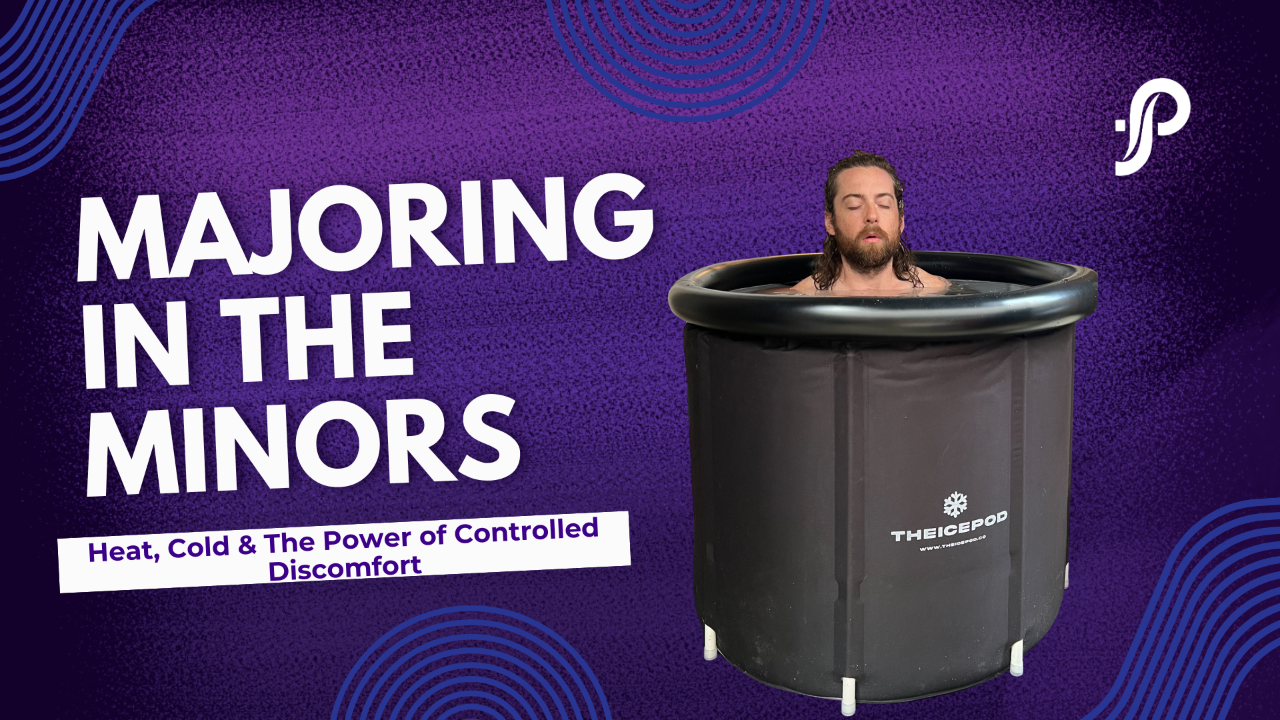
I'm starting with heat and cold therapy because they’ve made a bigger impact on me than I ever expected. Not because they’re trendy, not because of biohacking culture, and not because they look cool on Instagram, but because they’ve genuinely improved how my body feels, how I recover, and how I handle stress. What surprised me most is that the m...
Last week, in “Food Is Medicine- But Only If We Teach It,” we talked about how what we eat shapes our brain, our hormones, our mood, our immune system, and the long-term arc of our health just as powerfully as how we move. We explored how food becomes information for the body, how kids learn by watching us, and how nutrition is one of the strongest levers we have for expanding our healthspan. And as we wrap up this series, it’s important to remember what we’ve been building week by week: the idea that fitness isn’t just training, or nutrition, or discipline- it’s the entire ecosystem of habits and behaviors that determine who we become.
We’ve spent eight weeks breaking down why fitness is so much more than workouts, reps, or aesthetics. We’ve dug into movement, childhood development, physiology, the psychology of failure, and the role food plays in shaping human resilience. Now, as this series comes to a close, I want to tie every...
Last week, in “The Physiology of Movement- Why Exercise Changes Everything,” we dug into what happens inside the body when we move- how exercise rewires the brain, strengthens the immune system, expands our healthspan, and literally slows the biology of aging. And although this entire series has been centered around fitness and movement as the foundation for a better, stronger, longer life, I want to make something clear at the start of this week’s topic: fitness is not just about working out. Fitness is how healthy, capable, and functional we are as human beings and a massive part of that isn’t just how we move, but how we fuel that movement.
You can’t talk about true fitness without talking about nutrition. You can’t separate physical resilience from the food that builds every muscle fiber, fuels every hormone, powers every thought, and drives every system of the body. Movement is medicine, we’ve estab...
Last week in “Failing Forward: The Psychology of Fitness,” we talked about how growth isn’t linear- how every setback is feedback, and how failure is the foundation of progress. Fitness trains more than the body; it trains the mind to get comfortable with challenge, to see effort as victory, and to keep showing up when things aren’t perfect. This week, we’re shifting from the psychology of movement to the physiology- the science behind why exercise doesn’t just make us look better, but literally changes how every system in the body and brain function.
We all know movement makes us stronger, fitter, and leaner. But the real power of exercise goes far beyond the mirror. On a biological level, movement reshapes who we are. It upgrades the body’s internal operating system- improving everything from brain function and immunity to metabolism, mood, and longevity. Exercise isn’t just about burni...
Last week in “Drugs Numb, Fitness Heals,” we talked about how modern culture teaches us to escape discomfort instead of facing it; how we’ve been trained to numb instead of heal. We looked at how movement, discipline, and self-respect create real change from the inside out. This week, we’re taking that same idea- embracing the hard stuff- and applying it to the mental side of fitness. Because if drugs numb and fitness heals, then failure is the medicine that makes us stronger.
We’ve all been there. You miss a workout. You fall off your plan. You eat something you said you wouldn’t. You lose motivation and tell yourself, “I blew it.” But what if you didn’t? What if that “failure” was actually the feedback you needed to move forward?
We live in a world obsessed with perfection- with instant results, quick fixes, and before-and-after transformations. But fitness doesn’t work like that. Growth never moves in ...
50% Complete
Lorem ipsum dolor sit amet, consectetur adipiscing elit, sed do eiusmod tempor incididunt ut labore et dolore magna aliqua.